Tai Chi is often called moving meditation, but the phrase only becomes real once you begin to practise. It is not simply slow movement. It is the training of attention inside movement.
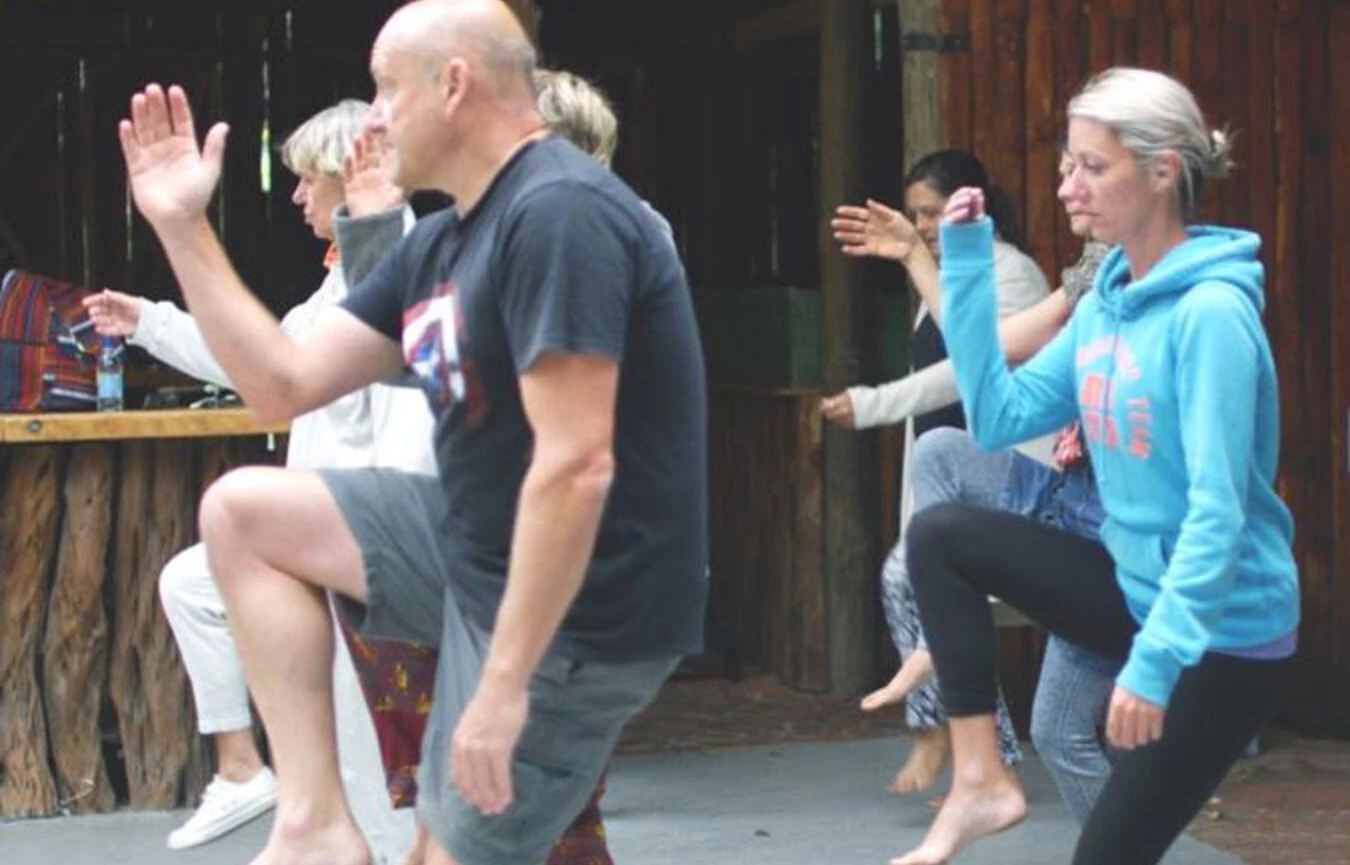
In class, you are not only learning where the hands go. You are learning to feel the feet, the legs, the shifting of weight, the breath, the spine, and the quality of your attention all at the same time. That is why Tai Chi can become such a powerful bridge between meditation and daily life.
Mindfulness in motion
Mindfulness in Tai Chi means being present enough to notice what the whole body is doing. In a movement such as Single Whip, it is easy to become fascinated by the lead hand and forget the hooked hand, the legs, or the weight transfer. Tai Chi asks you to stay with the whole pattern, not just one visible detail.
This is where the meditative side of the practice begins. You stop treating the body as separate parts and begin to feel it as one connected action.
Why non-judgment matters
Good practice requires attention without constant self-criticism. If you are busy judging the teacher, yourself, or the speed of your progress, some of your awareness is already elsewhere. Tai Chi gradually trains a quieter attention that notices what is happening without adding so much commentary.
That does not mean being passive. It means staying present enough to sense structure, tension, and timing more clearly.
A training for body and mind
Beginners often feel Tai Chi as a physical challenge because there is a lot to remember. Over time, the practice becomes increasingly subtle. The more familiar the choreography becomes, the more the inner work comes forward: breath, softness, rhythm, awareness, and a steadier mind.
This is one reason Tai Chi supports attention training so well. The body gives the mind something real to stay with, and the mind in turn helps refine the quality of movement.
Continue with Taoist Breathing, read What Is Tai Chi?, or view the student videos.