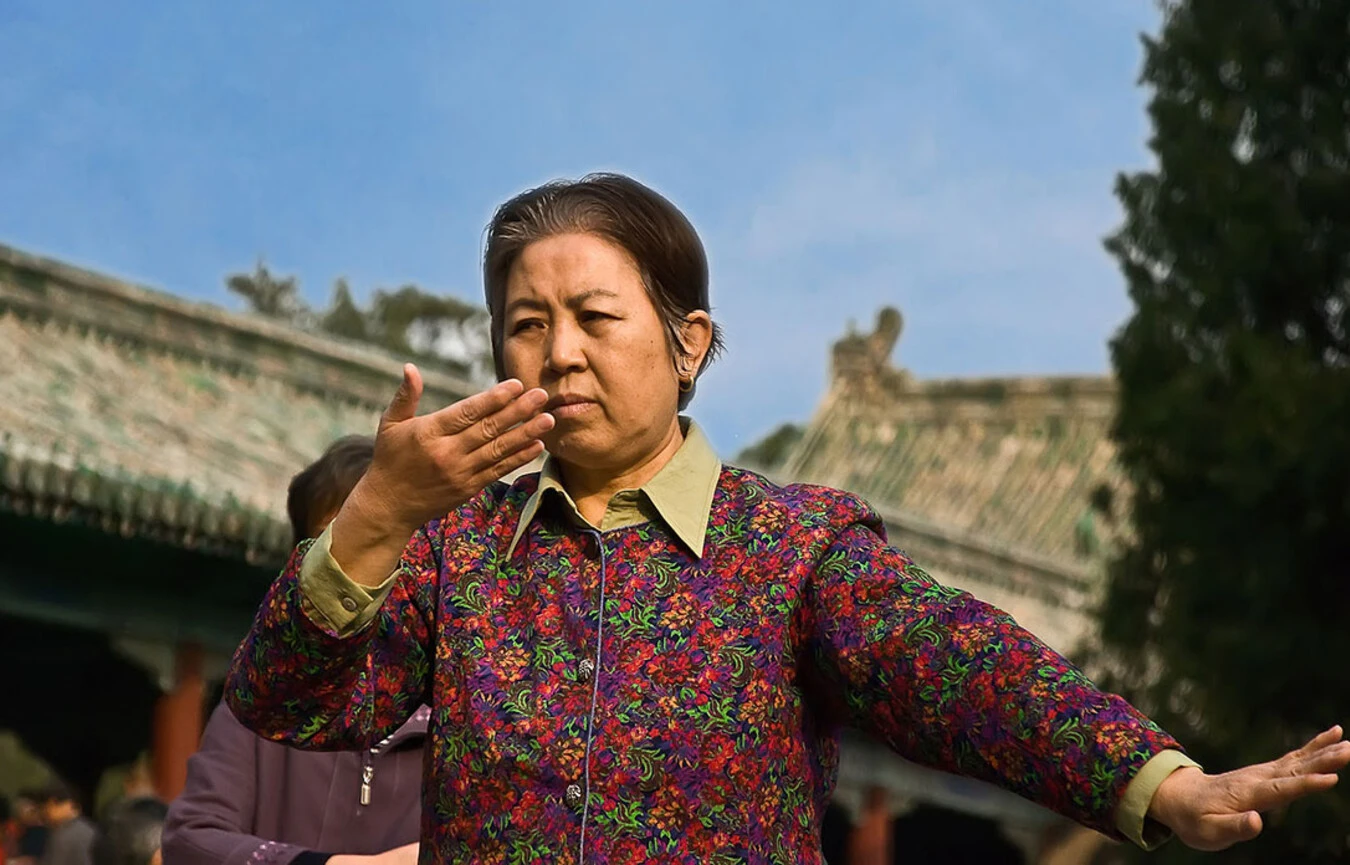
Mindfulness and Tai Chi fit naturally together because Tai Chi asks for awareness of the whole body, not just isolated parts. The practice becomes much more useful when attention is spread through posture, stepping, balance, breath, and timing together.
It is easy to become fascinated by the visible parts of a movement and miss the rest of the body. A movement like Single Whip is not only about the lead hand. It is also about the supporting leg, the opposite arm, the spine, and the quality of attention behind the movement.
Mindfulness as body awareness
In Tai Chi, mindfulness is not only a mental state. It is a practical way of sensing what the body is doing right now. When awareness improves, the movement starts to organize more cleanly and unnecessary strain becomes easier to notice.
Why non-judgment matters
One obstacle to mindful practice is judgment. If you are irritated, impatient, or overly pleased with yourself while moving, some of your attention is no longer available for the practice itself. Tai Chi gradually trains a more neutral and observant quality of mind.
From choreography to presence
In the beginning, students often focus on remembering the sequence. As the body becomes more familiar with the form, the real work deepens. You begin to notice how awareness changes the movement, and how movement changes awareness in return.
Continue with Tai Chi Moving Meditation, read What Is Tai Chi?, or join Tai Chi classes in Sedgefield.